
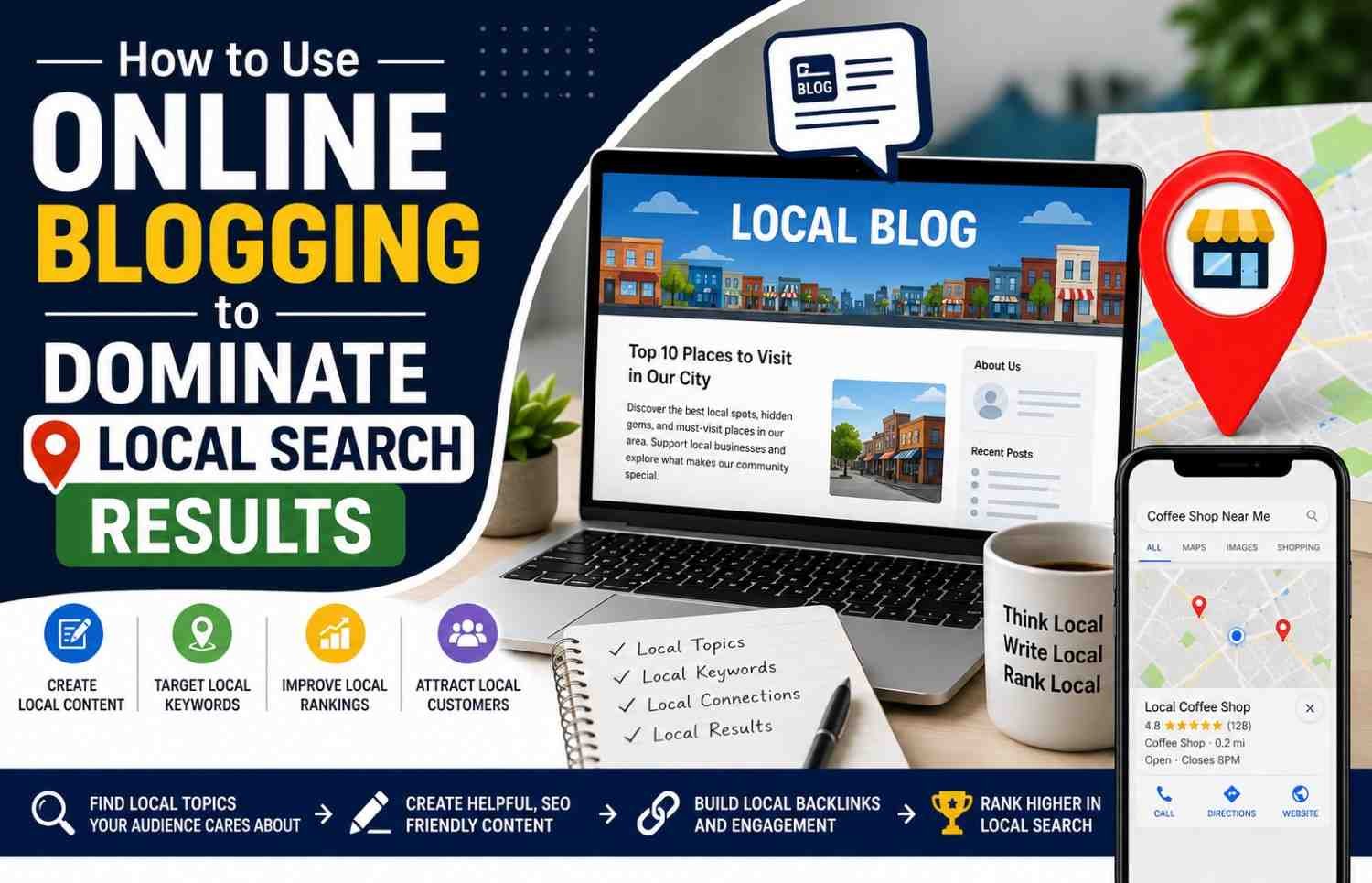
In today’s digital-first world, local businesses can no longer rely solely on word-of-mouth marketing. Whether you own a restaurant, medical clinic, law firm, retail store, or service-based business, appearing at the top of local search results can significantly increase visibility, leads, and sales. One of the most effective yet underutilized strategies for improving local search rankings is online blogging.
A well-planned blogging strategy helps businesses attract local customers, build authority, and improve search engine rankings. By publishing relevant, location-focused content, you can increase your chances of appearing in Google Search, Google Maps, and other local search platforms.
Why Local Search Matters
Local search refers to searches where users are looking for products, services, or information within a specific geographic area. Examples include:
- Best dentist in Lucknow
- Affordable digital marketing agency near me
- Top restaurants in Delhi
- Home painting services in Mumbai
According to industry studies, a large percentage of local searches lead to a store visit, phone call, or purchase within a short period. This makes local SEO one of the most valuable digital marketing strategies for small and medium-sized businesses.
How Online Blogging Supports Local SEO
Search engines prioritize websites that consistently provide valuable and relevant content. Blogging gives you the opportunity to create pages that target specific keywords, locations, and customer questions.
Benefits of online blogging for local SEO include:
- Increased website traffic
- Better keyword rankings
- Enhanced local relevance
- Improved customer trust
- More backlinks and social shares
- Greater visibility in search engines
When done correctly, blogging can become a powerful tool for dominating local search results.
1. Target Location-Based Keywords
The foundation of successful local blogging is keyword research. Focus on keywords that combine your service with a specific location.
Examples:
- Best cardiologist in Gorakhpur
- Cancer surgeon in Lucknow
- Ayurvedic treatment in Faizabad
- Web design company in Delhi
Use these keywords naturally throughout your blog posts, including:
- Blog title
- Headings
- Meta description
- URL slug
- Image alt text
- Content body
Avoid keyword stuffing and focus on creating helpful content that genuinely answers user questions.
2. Create Hyper-Local Content
Generic content often struggles to rank in local searches. Instead, create content tailored to your city, neighborhood, or region.
Examples of hyper-local blog topics:
- Top 10 Things to Do in Lucknow This Weekend
- How Local Businesses in Mumbai Can Improve Their SEO
- Healthcare Trends in Uttar Pradesh
- Best Places to Visit Near Gorakhpur
Hyper-local content demonstrates geographic relevance and helps search engines understand where your business operates.
3. Answer Local Customer Questions
Many people search online for answers before making purchasing decisions. Blogging allows you to address common concerns and establish authority.
Examples:
- How Much Does Home Painting Cost in Lucknow?
- What Are the Symptoms of Oral Cancer?
- Which Digital Marketing Services Are Best for Small Businesses?
These informational articles often rank well because they directly address user intent.
4. Optimize Every Blog Post for Local SEO
Creating content is only half the battle. Proper optimization ensures search engines can understand and rank your content.
Important local SEO elements include:
Title Tags
Include your primary keyword and location.
Example:
“Best Digital Marketing Agency in Lucknow – Expert SEO Tips”
Meta Descriptions
Write compelling descriptions that encourage clicks.
Example:
“Discover proven local SEO strategies to help your Lucknow business rank higher and attract more customers.”
Internal Linking
Link related pages and services throughout your website.
Schema Markup
Implement Local Business and Article Schema to help search engines better understand your content.
5. Publish Consistently
Search engines favor websites that are regularly updated with fresh content. Consistency signals that your website is active and relevant.
Recommended publishing frequency:
- Small businesses: 2–4 blogs per month
- Growing businesses: 1–2 blogs per week
- Competitive industries: Multiple posts weekly
A content calendar can help maintain consistency and ensure a steady flow of valuable information.
6. Leverage Online Blogging Platforms
Using established blogging platforms can help expand your reach and improve content visibility.
Platforms such as fsiBlog allow writers, businesses, and marketers to publish informative articles across multiple niches. Sharing valuable content through trusted blogging platforms can generate referral traffic, improve brand awareness, and strengthen your online presence.
Similarly, fsiBlog com is a online blogging platform where businesses can share industry insights, educational articles, and local content to reach wider audiences while supporting their SEO efforts.
7. Include Local Case Studies and Success Stories
People trust real experiences. Publishing case studies and customer success stories can improve engagement and conversion rates.
Examples:
- How We Helped a Local Business Increase Website Traffic by 200%
- Case Study: Improving SEO Rankings for a Healthcare Clinic in Lucknow
- Customer Success Story: Home Renovation Project in Delhi
These articles provide social proof while naturally incorporating location-based keywords.
8. Optimize Images for Local Search
Images can contribute significantly to local SEO performance.
Best practices:
- Use descriptive file names
- Add keyword-rich alt text
- Compress images for faster loading
- Include location references when relevant
Example:
best-dentist-clinic-lucknow.jpg
Well-optimized images may appear in Google Images and drive additional traffic.
9. Promote Blogs Through Local Channels
Publishing content is not enough. Promotion increases visibility and engagement.
Effective promotion methods include:
- Google Business Profile updates
- Facebook local groups
- Local directories
- Community forums
- Email newsletters
Greater engagement often results in improved search visibility over time.
10. Build Local Backlinks Through Blogging
Backlinks remain one of the strongest ranking factors. Quality blog content naturally attracts links from other websites.
Ways to earn local backlinks:
- Guest blogging
- Local business partnerships
- Chamber of commerce websites
- Local news publications
- Industry associations
The more authoritative local websites linking to your content, the stronger your local SEO becomes.
Also Read: Can Ayurvedic Treatment Help Manage Diabetes Naturally?
Measuring Blogging Success
Track the effectiveness of your blogging strategy using tools such as:
- Google Analytics
- Google Search Console
- Google Business Profile Insights
- SEO tracking software
Monitor:
- Organic traffic
- Keyword rankings
- Click-through rates
- Conversions
- Local visibility
Regular analysis helps identify what content performs best and where improvements can be made.
Conclusion
Online blogging remains one of the most powerful tools for improving local search visibility. By creating valuable, location-focused content, targeting local keywords, optimizing posts for SEO, and maintaining a consistent publishing schedule, businesses can significantly increase their online presence and attract more local customers.
Whether you’re a small business owner, healthcare provider, consultant, or eCommerce brand, a strategic blogging approach can help you outperform competitors and dominate local search results. Start publishing high-quality content today, and you’ll build the authority, trust, and visibility needed for long-term local SEO success.
About the Author