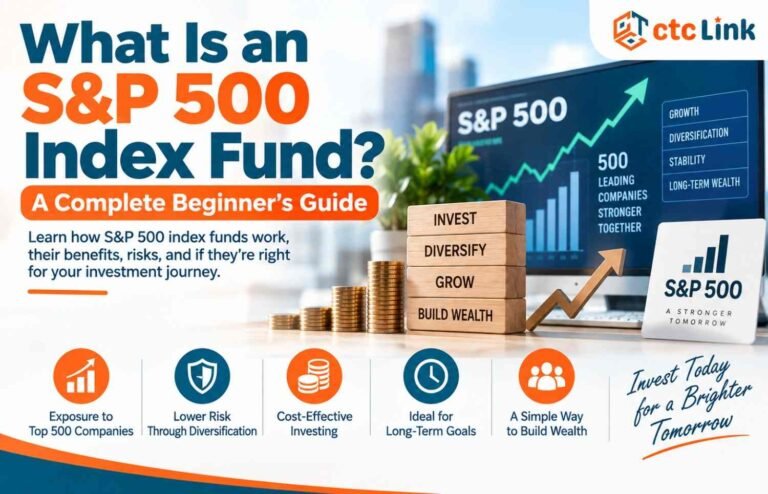
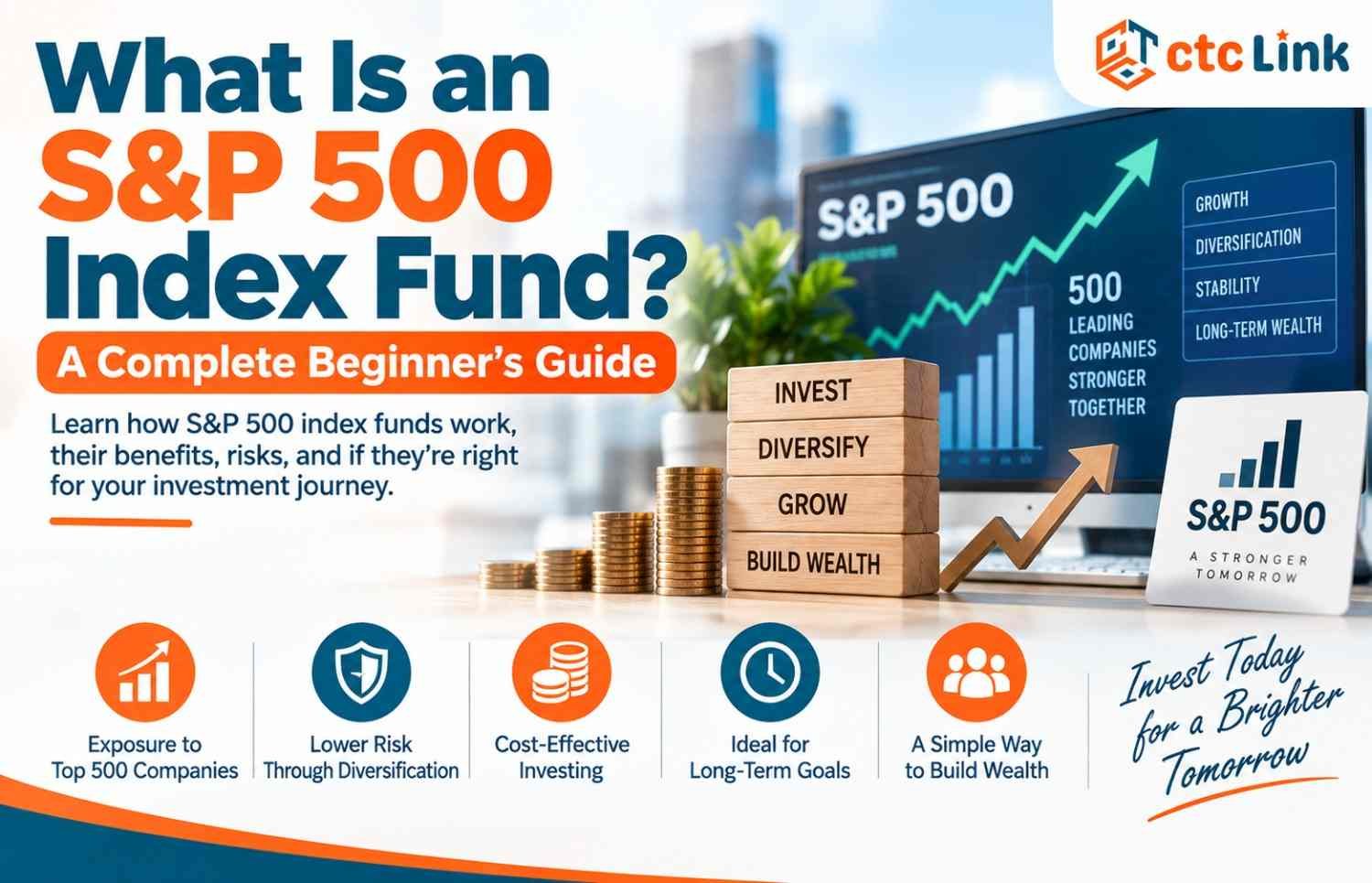
Investing can seem overwhelming when you’re just getting started. With thousands of stocks, mutual funds, ETFs, and financial products available, choosing the right investment can be confusing. One investment option that consistently attracts both beginners and experienced investors is the S&P 500 Index Fund.
If you’ve ever wondered what an S&P 500 Index Fund is, how it works, and whether it’s a good choice for your portfolio, this beginner-friendly guide will explain everything you need to know.
Understanding the S&P 500
Before learning about an S&P 500 Index Fund, it’s important to understand the S&P 500 Index itself.
The Standard & Poor’s 500 Index (S&P 500) is one of the most widely followed stock market indexes in the world. It tracks the performance of approximately 500 of the largest publicly traded companies in the United States.
Some well-known companies included in the S&P 500 are:
- Apple
- Microsoft
- Amazon
- Alphabet (Google)
- Meta Platforms
- Nvidia
- Berkshire Hathaway
- Johnson & Johnson
These companies represent various sectors of the economy, including technology, healthcare, finance, consumer goods, energy, and communication services.
Because the S&P 500 includes large, established businesses, it is often considered a benchmark for the overall health of the U.S. stock market.
What Is an S&P 500 Index Fund?
An S&P 500 Index Fund is a mutual fund or exchange-traded fund (ETF) designed to replicate the performance of the S&P 500 Index.
Instead of trying to outperform the market by selecting individual stocks, an index fund simply invests in the same companies that make up the S&P 500 and in roughly the same proportions.
This investment strategy is known as passive investing.
For example, if Apple represents 7% of the S&P 500, the index fund will allocate approximately 7% of its assets to Apple stock.
The goal is straightforward:
Match the market’s performance rather than beat it.
How Does an S&P 500 Index Fund Work?
An S&P 500 Index Fund pools money from many investors and uses that capital to purchase shares of all the companies included in the index.
When the value of those companies rises, the fund’s value typically increases. When stock prices decline, the fund may also lose value.
Because the fund tracks hundreds of companies, investors gain instant diversification without needing to buy individual stocks separately.
Example
Imagine investing ₹10,000 in an S&P 500 Index Fund.
Instead of purchasing shares of just one company, your investment is spread across hundreds of leading U.S. businesses. This reduces the risk associated with relying on the performance of a single stock.
Why Are S&P 500 Index Funds So Popular?
S&P 500 Index Funds have become one of the most recommended investment options for long-term investors.
Here are some key reasons why.
1. Instant Diversification
Diversification helps reduce investment risk.
When you buy shares of a single company, your returns depend entirely on that company. However, an S&P 500 Index Fund spreads your money across hundreds of businesses.
Even if one company performs poorly, the impact on the overall portfolio is limited.
2. Low Investment Costs
Most S&P 500 Index Funds have very low expense ratios compared to actively managed funds.
Since fund managers are not actively researching and selecting stocks, operating costs remain lower.
Lower fees mean more of your money stays invested and continues growing over time.
3. Strong Historical Performance
While past performance doesn’t guarantee future results, the S&P 500 has historically delivered attractive long-term returns.
Over several decades, the index has generated average annual returns of around 10% before inflation.
This long-term growth potential makes it appealing for retirement and wealth-building goals.
4. Simplicity
Many beginners struggle to evaluate individual companies and market trends.
An S&P 500 Index Fund eliminates the need for constant stock research and portfolio management.
You simply invest consistently and allow the market to work over time.
5. Suitable for Long-Term Investing
The S&P 500 has experienced market crashes, recessions, and economic downturns throughout history.
Despite these challenges, the index has generally recovered and continued growing over the long term.
This makes it a popular choice for investors with a long investment horizon.
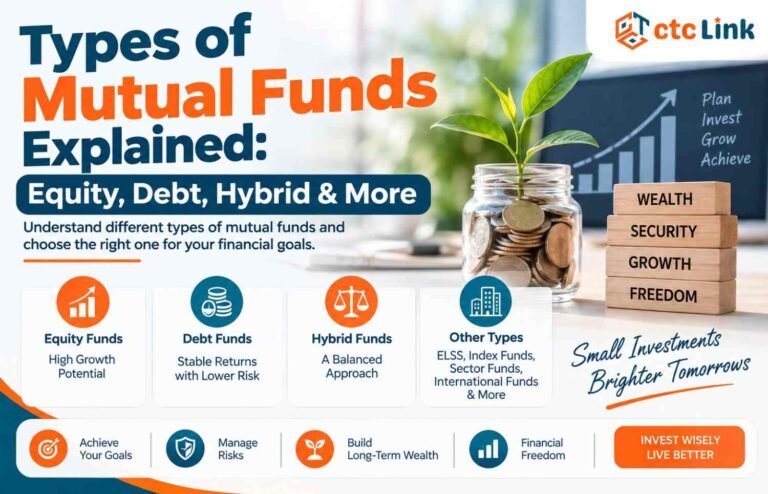
Also Read: Types of Mutual Funds Explained: Equity, Debt, Hybrid & More
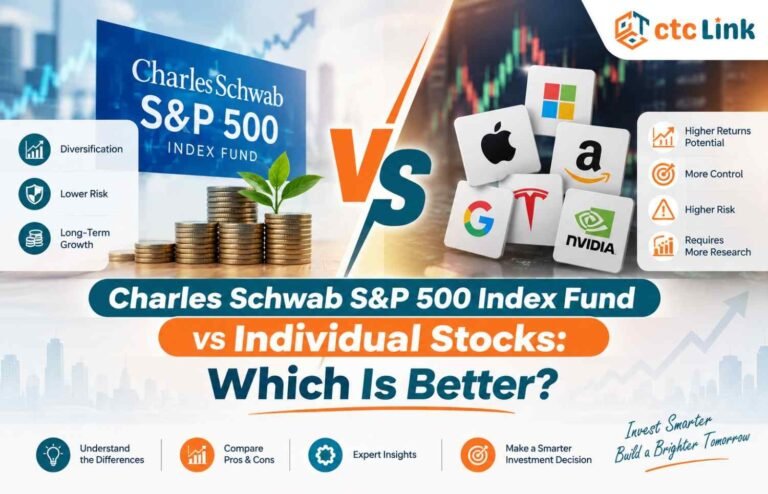
S&P 500 Index Funds vs Individual Stocks
Many new investors wonder whether they should buy individual stocks or invest in an index fund.
Here’s a comparison:
| Feature | S&P 500 Index Fund | Individual Stocks |
|---|---|---|
| Diversification | High | Low |
| Risk Level | Moderate | High |
| Research Required | Minimal | Extensive |
| Cost | Low | Varies |
| Potential Returns | Market Returns | Can Be Higher or Lower |
| Beginner Friendly | Yes | Less Suitable |
For most beginners, an S&P 500 Index Fund offers a simpler and less risky approach to investing.
Mutual Funds vs ETFs Tracking the S&P 500
S&P 500 investments are available in two common formats:
S&P 500 Mutual Funds
These funds are bought directly through fund providers and are priced once per day after the market closes.
S&P 500 ETFs
Exchange-Traded Funds (ETFs) trade on stock exchanges throughout the day, similar to regular stocks.
Popular examples include:
- SPDR S&P 500 ETF (SPY)
- Vanguard S&P 500 ETF (VOO)
- iShares Core S&P 500 ETF (IVV)
Both options provide exposure to the same index, and the choice often depends on personal preference and investment strategy.
Risks of Investing in an S&P 500 Index Fund
Although S&P 500 Index Funds are considered relatively safe compared to individual stocks, they still carry risks.
Market Risk
If the overall stock market declines, the value of the fund will also fall.
Economic Risk
Economic recessions, inflation, and global events can affect corporate earnings and stock prices.
No Guaranteed Returns
Unlike fixed deposits or government-backed savings products, returns are not guaranteed.
Limited International Exposure
Most S&P 500 Index Funds focus on U.S. companies. Investors seeking global diversification may need additional international investments.
Who Should Invest in an S&P 500 Index Fund?
An S&P 500 Index Fund may be suitable for:
- First-time investors
- Long-term wealth builders
- Retirement planners
- Passive investors
- Investors seeking diversification
- Individuals looking for low-cost investment options
However, investors should always assess their financial goals, risk tolerance, and investment horizon before making investment decisions.
Tips for Beginners Investing in S&P 500 Index Funds
Invest Regularly
Using a systematic investment approach helps reduce the impact of market volatility.
Think Long Term
Short-term market fluctuations are normal. Focus on long-term growth rather than daily price movements.
Reinvest Dividends
Many S&P 500 companies pay dividends. Reinvesting those dividends can significantly increase long-term returns.
Avoid Emotional Decisions
Market declines can be unsettling, but panic selling often hurts long-term performance.
Keep Costs Low
Choose funds with low expense ratios whenever possible.
Final Thoughts
An S&P 500 Index Fund is one of the simplest and most effective ways for beginners to start investing. By providing exposure to 500 of America’s largest companies, these funds offer diversification, low costs, and strong long-term growth potential.
While no investment is completely risk-free, the S&P 500 has proven to be a powerful wealth-building tool for millions of investors worldwide. Whether you’re saving for retirement, financial independence, or future goals, an S&P 500 Index Fund can serve as a solid foundation for a long-term investment strategy.
For beginners looking to enter the stock market without the complexity of selecting individual stocks, an S&P 500 Index Fund remains one of the most practical and accessible investment choices available today.
FAQs
1. Is an S&P 500 Index Fund good for beginners?
Yes. Its diversification, low costs, and simplicity make it one of the most beginner-friendly investment options.
2. How much money do I need to invest in an S&P 500 Index Fund?
The minimum investment varies depending on the fund provider. Some ETFs allow investors to start with the cost of a single share.
3. Can I lose money in an S&P 500 Index Fund?
Yes. The fund’s value can decline during market downturns, but historically it has recovered over long periods.
4. What is the difference between an index fund and an ETF?
An index fund is typically a mutual fund, while an ETF trades on stock exchanges like a stock. Both can track the S&P 500.
5. Is the S&P 500 better than picking individual stocks?
For many beginners, the diversification and lower risk of an S&P 500 Index Fund make it a more practical choice than selecting individual stocks.
About the Author