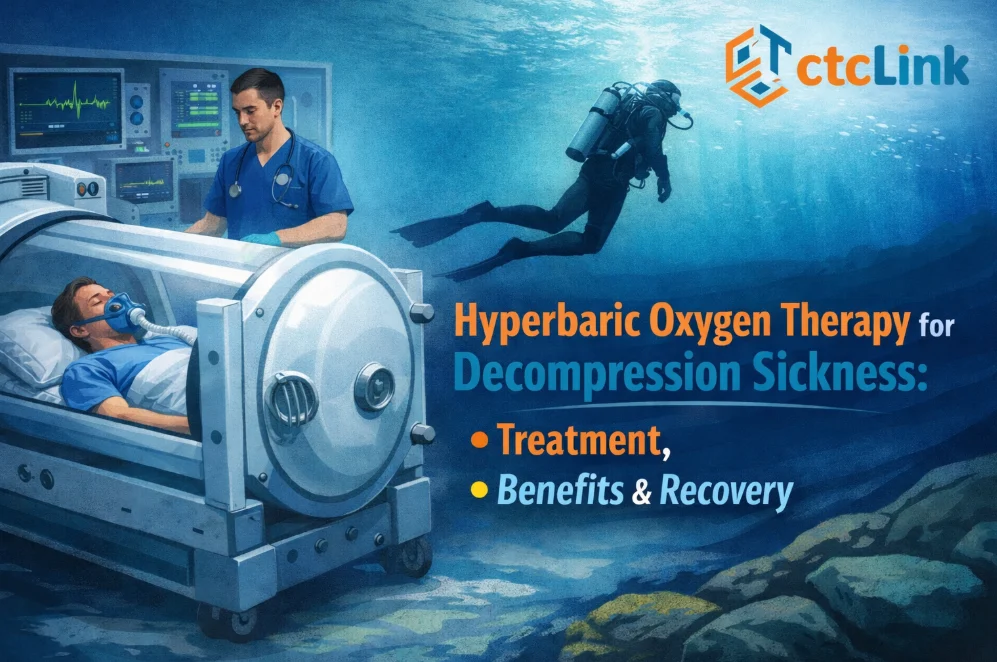
Decompression sickness (DCS), sometimes referred to as “the bends,” is a dangerous condition that can strike down scuba divers, underwater workers, pilots – and even astronauts. It happens when dissolved gases the most prevalent being nitrogen — come out of solution in a fast manner and form bubbles in your blood and tissues. Hyperbaric Oxygen Therapy (HBOT) is one of the most successful and commonly accepted treatments for this disorder.
HBO has changed the course of treatment of decompression illness by expediting recovery, minimizing chronic disability and enhancing survival. In this post, we will discuss what is HBOT, how does it work, the benefits of Hyperbaric Oxygen Treatment (HBOT), procedure and expected results.
What is Decompression Sickness?
Decompression sickness results from a sudden drop in pressure around an individual. In deep dives or under pressure, nitrogen is forced into the body’s tissues. If ascent or pressure reduction occurs too rapidly, nitrogen bubbles develop in the body.
Common Causes
- Rapid ascent during scuba diving
- Equipment malfunction
- Flying soon after diving
- Pressure tunnel or mine work
Symptoms of Decompression Sickness
Symptom severity ranges from mild to life-threatening.
Mild Symptoms
- Joint pain
- Muscle pain
- Fatigue
- Skin itching or rash
Severe Symptoms
- Breathing difficulty
- Paralysis or weakness
- Confusion or dizziness
- Loss of consciousness
It is imperative to give treatment as soon as possible, and here Hyperbaric Oxygen Therapy has a main function.
What is Hyperbaric Oxygen Therapy (HBOT)?
Hyperbaric Oxygen Therapy is a treatment in which patients breathe 100% oxygen while they are placed in a pressure chamber. It is the higher pressure in the chamber that makes the oxygen more soluble so it can be absorbed by the bloodstream.
HBOT is an FDA-approved and internationally accepted treatment for:
- Decompression sickness
- Carbon monoxide poisoning
- Non-healing wounds
- Radiation injuries
- Severe infections
How HBOT Treats Decompression Sickness
HBOT goes to the root cause of decompression sickness—gas bubbles in tissue and in the blood.
Also Read: Benefits of Eating Honey at Night: Why You Should Add It to Your Bedtime Routine
Reduces Bubble Size
The higher pressure can help to contract those nitrogen bubbles, which makes them easier for the body to get rid of.
Improves Oxygen Delivery
In tissues, nitrogen is replaced by pure oxygen increasing the supply of oxygen to injured parts.
Reduces Inflammation
HBOT decreases swelling and limits additional injury to the tissue.
Supports Tissue Repair
Elevated oxygen levels help increase the speed of healing and cell production.
Therapy for Decompression Sickness with HBOT
Initial Assessment
Before treatment is under way, doctors assess the symptoms, a person’s diving history and general health.
Inside the Hyperbaric Chamber
The patient relaxes in a chamber and breathes 100 percent oxygen. Treatment sessions typically last:
- 60 to 120 minutes per session
- Multiple sessions depending on severity
Monitoring
Vital signs and response to treatment are constantly observed by healthcare providers.
The Advantages of Hyperbaric Oxygen Treatment for Decompression Illness
Rapid Symptom Relief
Most patients receipt some benefit after the first few sessions.
Prevents Long-Term Damage
HBOT can significantly reduce the risk of suffering permanent nerve, joint or lung damage.
Improves Survival Rates
The results for patients who are treated with HBOT early in the course of their disease is very good.
Non-Invasive Treatment
HBOT is noninvasive and comfortable when compared to surgery.
Enhances Recovery Speed
Patients heal more quickly, and can resume regular activities sooner.
Recovery After HBOT Treatment
Recovery depends on:
- Severity of decompression sickness
- Time from symptom onset to treatment
- Overall health condition
Short-Term Recovery
- Reduced pain and neurological symptoms
- Improved breathing
- Better mobility
Long-Term Recovery
- Lower risk of chronic complications
- Improved quality of life
- Better neurological function
After treatment, doctors may advise resting, drinking water and avoiding pressure changes for a period of time.
Does HBOT Have Any Side Effect?
HBOT is considered safe, though mild and temporary effects can occur.
Possible Side Effects
- Ear pressure discomfort
- Sinus pressure
- Temporary vision changes
- Fatigue
Severe side effects are not likely when treatment is carried out under medical supervision.
Who Is HBOT for DCS Suitable For?
HBOT is recommended for:
- Divers with DCS symptoms
- Workers exposed to high-pressure environments
- Patients with gas embolism
- Patients with symptoms following diving
Prevention, as always, is preferable to cure!
Prevention Tips for Decompression Sickness
Although HBOT is very effective, prevention is still the best approach.
- Follow safe diving ascent rates
- Use proper diving equipment
- Avoid flying immediately after diving
- Stay hydrated
- Adhere to the dive tables or dive computer instructions
Future of HBOT for DCI Treatment
Today HBOT is more sophisticated and readily available as scientific studies continue. Today’s chambers are safer, more comfortable and in general more efficient. New therapeutic protocols are also providing better results and shorter duration of therapy.
HBOT has been accepted as the gold treatment for decompression sickness universally.
Conclusion
Hyperbaric Oxygen Therapy has transformed the care of decompression illness allowing rapid, complete and safe resolution of symptoms. By reducing gas bubbles, enhancing oxygen delivery and promoting tissue healing, HBOT profoundly enhances the survival and long-term prognosis.
Decompression sickness with any of its manifestations following diving or pressure intervention is a situation where immediate medical consultation and HBOT may be life-saving. Decompression sickness is manageable with adequate recognition, prompt treatment and prophylaxis.
About the Author